
For Muslims, understanding the permissibility of ingredients in cosmetics is essential. Alcohol, commonly found in skincare, perfumes, and personal care products, often raises questions about halal compliance. This guide explains types of alcohol in cosmetics, halal considerations, and safe alternatives.
1. Why Alcohol in Cosmetics Matters
- Alcohol is widely used in toners, hand sanitizers, perfumes, and skincare
- It serves as a solvent, preservative, or antibacterial agent
- Muslims must determine whether the alcohol is permissible (halal) or impermissible (haram)
Tip: Not all alcohols are automatically haram; the source and usage determine compliance.
2. Types of Alcohol Found in Cosmetics
| Type of Alcohol | Common Use | Halal Concern |
|---|---|---|
| Ethanol / SD Alcohol | Toners, perfumes, hand sanitizers | Haram if derived from fermented sugar, grains, or haram sources |
| Isopropyl Alcohol | Nail polish, cleansers, antiseptics | Considered synthetic; some scholars permit if denatured |
| Benzyl Alcohol | Preservative in creams & lotions | Often considered safe if not from haram sources |
| Fatty Alcohols (Cetyl, Stearyl, Cetearyl) | Moisturizers & creams | Usually plant-derived and halal-compliant |
Tip: Alcohol in small, non-ingested amounts may be treated differently by scholars, but certification provides certainty.
3. Halal Considerations
Islamic rulings generally classify alcohol as haram if:
- It is intoxicating (e.g., ethanol from fermented sources)
- It is derived from haram animals or by-products
Exceptions:
- Some non-intoxicating alcohols (fatty alcohols from plants) are considered halal
- Denatured or synthetic alcohol may be permissible if not harmful or intoxicating
Tip: When in doubt, look for halal certification or choose alcohol-free alternatives.
4. Common Products Containing Alcohol
- Toners & Astringents: Often contain ethanol for cleansing and tightening skin
- Perfumes & Fragrances: May contain ethanol as solvent
- Hand Sanitizers & Cleansers: Use alcohol for antibacterial purposes
- Hair Sprays & Styling Products: Alcohol for quick drying
Tip: Many halal brands now provide alcohol-free or plant-based alternatives.
5. Halal Alternatives to Alcohol-Based Products
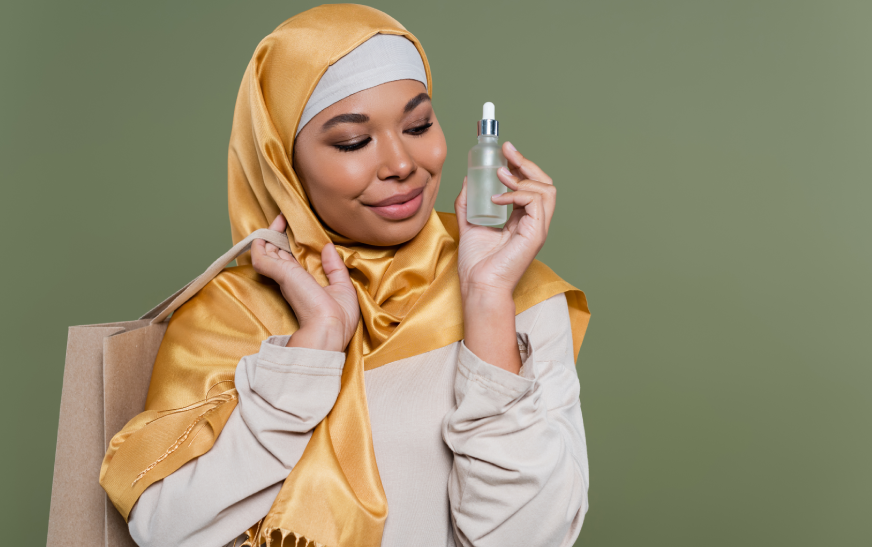
- Alcohol-Free Toners: Use witch hazel, rose water, or aloe vera
- Halal Perfumes (Attar or Essential Oil-Based): No ethanol, plant-derived
- Sanitizers: Formulated with benzalkonium chloride or other halal-approved antibacterial agents
- Hair Care Products: Water-based or plant-derived alcohol formulations
Tip: Switching to halal alternatives ensures faith-compliant daily routines.
6. How to Choose Halal Cosmetics
- Check Halal Certification: IFANCA, JAKIM, HFA, or other trusted logos
- Read Ingredient Labels Carefully: Avoid ethanol from fermented sources
- Research Brand Transparency: Trusted brands disclose ingredient origins
- Patch Test New Products: Even halal formulations may cause sensitivity
- Opt for Plant-Based or Alcohol-Free Formulations: Reduces doubts and ensures compliance
Tip: Consistency and careful selection are key to maintaining a halal beauty routine.
7. Benefits of Using Halal Alcohol-Free Cosmetics
- Faith-Friendly: Fully aligns with Islamic dietary and ethical laws
- Gentle on Skin: Alcohol-free formulas reduce dryness and irritation
- Ethical & Cruelty-Free: Many halal brands prioritize ethical sourcing
- Holistic Wellness: Enhances confidence while respecting spiritual values
Tip: Halal alcohol-free cosmetics are ideal for all ages, including children and sensitive skin types.
8. Practical Tips for Daily Use
- Replace ethanol-based toners with aloe or rose water toners
- Choose perfumes and attars made from essential oils
- Verify that skincare and personal care items carry halal certification
- Keep a list of trusted brands for convenience
- Rotate products gradually to allow skin to adjust
Tip: Even small steps toward halal alternatives make a big difference in faith compliance.
9. Final Thoughts
Alcohol in cosmetics is a complex issue, but with awareness and careful selection, Muslims can maintain halal-compliant skincare and beauty routines. By understanding:
- Types of alcohol used in products
- Halal considerations and exceptions
- Trusted halal-certified alternatives
…you can confidently use safe, effective, and faith-aligned cosmetics. Halal beauty practices protect skin health, ethical values, and spiritual integrity, creating a holistic approach to self-care.